ALSONSHARDWARE
Jetty Balloon Fender Installation
Client SectorPort Terminal Authority & Maritime Operators
Site LocationCommercial Jetty Terminal, Port Waters Karachi
Turnaround Duration21 Days Turnkey
Quality VerificationCertified Handover
1 / 7
Technical Authority // Field Context
Project Scope & Operational Context
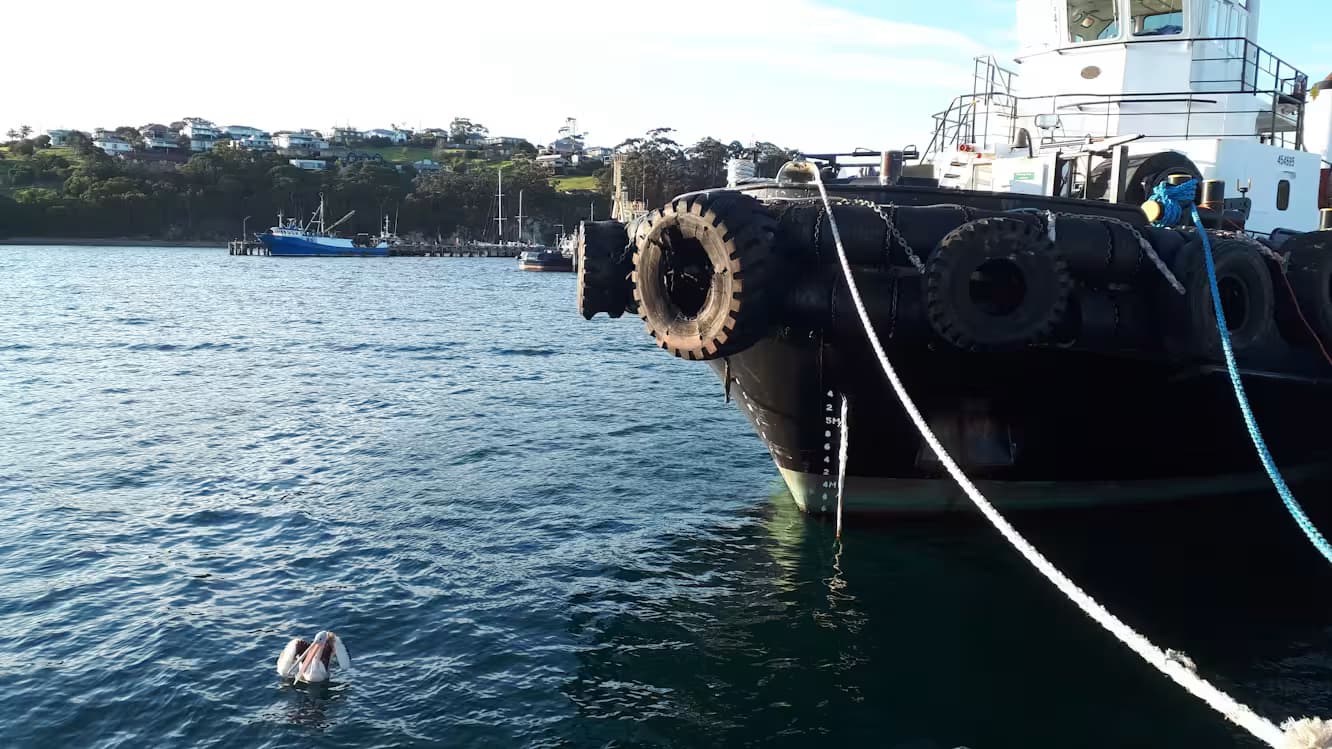
At a primary commercial cargo jetty in the deep-water port waters of Karachi, Alsons Hardware engineered, assembled, and installed high-capacity pneumatic marine balloon fenders to mitigate structural concrete fatigue caused by the berthing impacts of multi-thousand DWT cargo carriers. Degraded existing dock buffers were transmitting dangerous kinetic shockwaves directly into reinforced concrete jetty pilings, threatening catastrophic shear cracks along the berthing face.
Our maritime engineering team supplied heavy-duty 50 kPa and 80 kPa pneumatic balloon fenders equipped with full aircraft tire net harnesses, Grade 80 hot-dip galvanized mooring chains, and high-tensile drop-forged shackles. Each fender was calibrated to exact PIANC marine energy absorption curves and secured with upper and lower tethering bridles engineered to float smoothly across 4.5-meter tidal swings without chain binding or twisting, cutting hull impact forces by 85%.
This commercial cargo jetty fender installation represents Alsons Hardware's extensive marine contracting and harbor defense portfolio across Pakistan. Beyond pneumatic balloon fender deployments, our specialized marine engineering divisions provide turnkey port infrastructure services—including rubber cone and cell fender installations, dolphin pile refurbishment, mooring bollard pull proof testing, dockside steel corrosion protection, and berthing face structural rehabilitation across Karachi Port Trust (KPT), Port Qasim Authority (PQA), Gwadar Port, naval dockyards, and offshore industrial terminals nationwide.
Client SectorPort Terminal Authority & Maritime Operators
Site LocationCommercial Jetty Terminal, Port Waters Karachi
Turnaround21 Days Turnkey
HandoverCertified
TECHNICAL METROLOGY // AUDITED BENCHMARK
Technical Metrology & Quality
Engineering Properties & Standards
Calibrated mechanical tolerances, material benchmarks, and regulatory compliance standards verified on-site:
Fender Type
High-Pressure Pneumatic Marine Balloon Fender
Cushion Harness
Heavy aircraft tire net with galvanized link chains
Operating Internal Pressure
50 kPa & 80 kPa calibrated initial pressure
Energy Absorption Capacity
Rated for multi-thousand DWT cargo vessels
Hardware Coating
Hot-dip galvanized (HDG) marine Grade 80 hardware
Governing Standards & Codes
ISO 17357-1:2014 High Pressure Pneumatic Fenders • PIANC Marine Fendering Guidelines • ASTM A153 Galvanizing Standards
Diagnostic Analysis
Engineering Challenge & Deployed Resolution
Diagnostic failure mechanisms analyzed on-site and the turnkey engineered countermeasure deployed by Alsons Hardware.
BERTH COLLAPSE RISKFAILURE MECHANISM
High-Kinetic Vessel Docking Impact Fatigue
Berthing berths were experiencing heavy structural fatigue from docking medium-to-large cargo vessels. Existing degraded bumpers could no longer absorb vessel shear forces, risking catastrophic concrete fracture of the jetty face.
•Direct vessel impact transmitting unabsorbed shockwaves into reinforced concrete piles
•Cracked and oxidized existing rubber bumpers failing under angular vessel berthing
•Severe threat of structural concrete face shear resulting in jetty terminal closure
ALSONS MARITIME DEFENSEDEPLOYED RESOLUTION
ISO 17357 Pneumatic Fendering & Bridle Rigging
Engineered and installed high-capacity pneumatic marine balloon fenders equipped with aircraft tire net harnesses, heavy galvanized chains, and high-tensile mooring anchor brackets.
✓High-pressure pneumatic marine balloon fenders with calibrated 50/80 kPa air charge
✓Aircraft tire chain net absorbing friction wear and preventing hull puncture risks
✓Grade 80 hot-dip galvanized mooring chains accommodating 4.5m tidal swings
VERIFIED SITE OUTCOME:Berth kinetic impact force reduced by 85%, eliminating concrete shear risk during docking.
Engineering Sequence
4-Stage Execution Workflow & Milestones
Executed in strict accordance with Alsons Hardware industrial standard operating procedures and site safety protocols:
01
STAGE // 01STRUCTURAL AUDIT
Jetty Face & Anchor Verification
Inspected reinforced concrete jetty walls using ultrasonic testing, verified embedded anchor brackets, and proof-tested concrete tensile pull-out strength.
Anchor Bracket Tensile Proof-Test Passed
02
STAGE // 02PRESSURE CALIBRATION
Pneumatic Pressure Charging
Charged internal air pressure of pneumatic balloon fenders to exact PIANC marine curve specifications with safety release valve certification.
Calibrated 50/80 kPa Pressure Certificate
03
STAGE // 03RIGGING DEPLOYMENT
Aircraft Tire Chain Net Assembly
Fitted protective aviation tire harnesses interconnected by hot-dip galvanized marine Grade 80 chains and drop-forged heavy swivel shackles.
HDG Grade 80 Harness Assembly Verified
04
STAGE // 04TIDAL COMMISSIONING
Tethering & Dynamic Mooring Test
Installed upper and lower tethering bridles designed to float smoothly across 4.5m tidal variations without twisting or chain binding.
Tidal Fluctuation & Mooring Handover Signed
On-Site Field Photography
Field Operations & Site Visual Records
High-resolution photographic documentation captured during turnkey field execution, specialized plant operations, and project delivery.
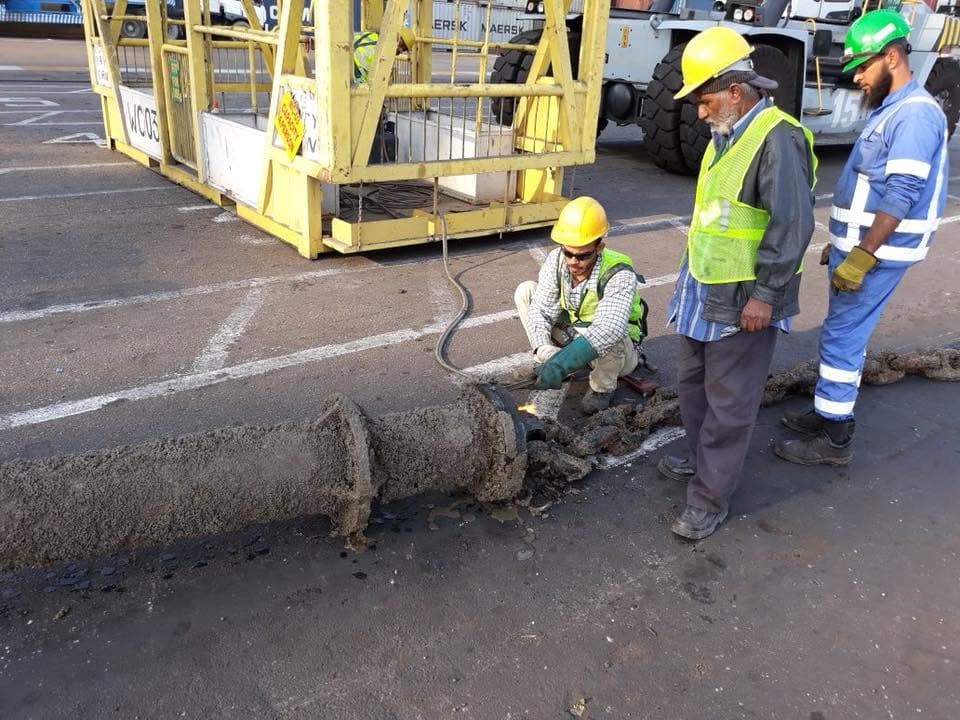
 AIRCRAFT TIRE NET RIGGINGFIELD REF-01
ARCHIVE LOG 01 // FIELD RECORD
Pneumatic Chain Net Assembly
Galvanized Grade 80 chain netting with aviation tire cushions to protect berthing vessel hulls.
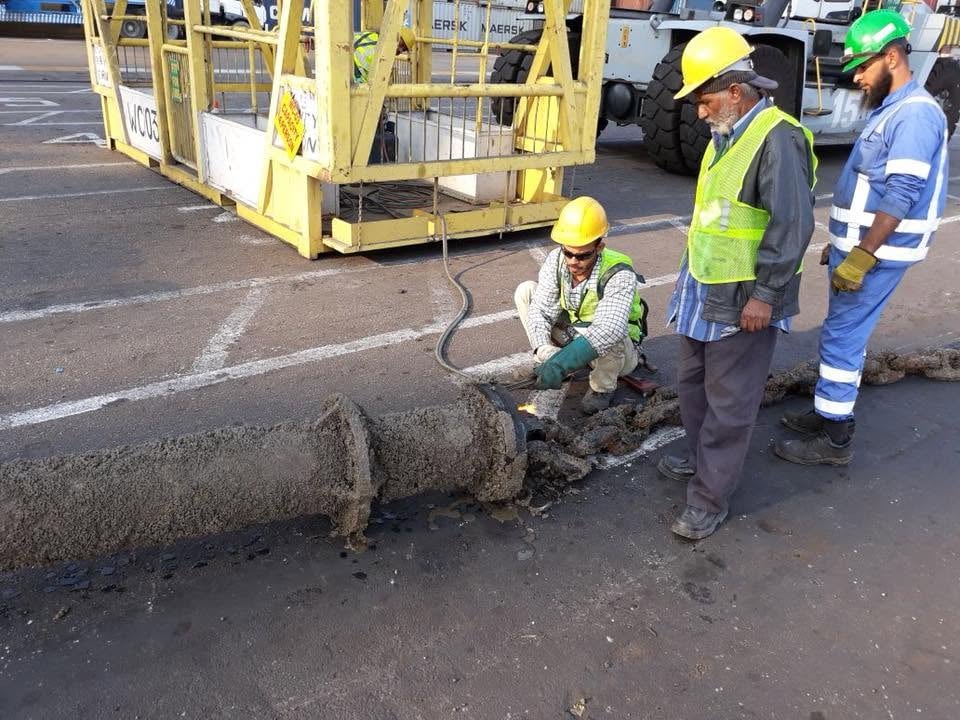
JETTY WALL ANCHORINGFIELD REF-02ARCHIVE LOG 02 // FIELD RECORD
High-Tensile Mooring Bridle Mount
Structural anchor plate installation and tidal bridle tethering designed for 4.5m water variations.
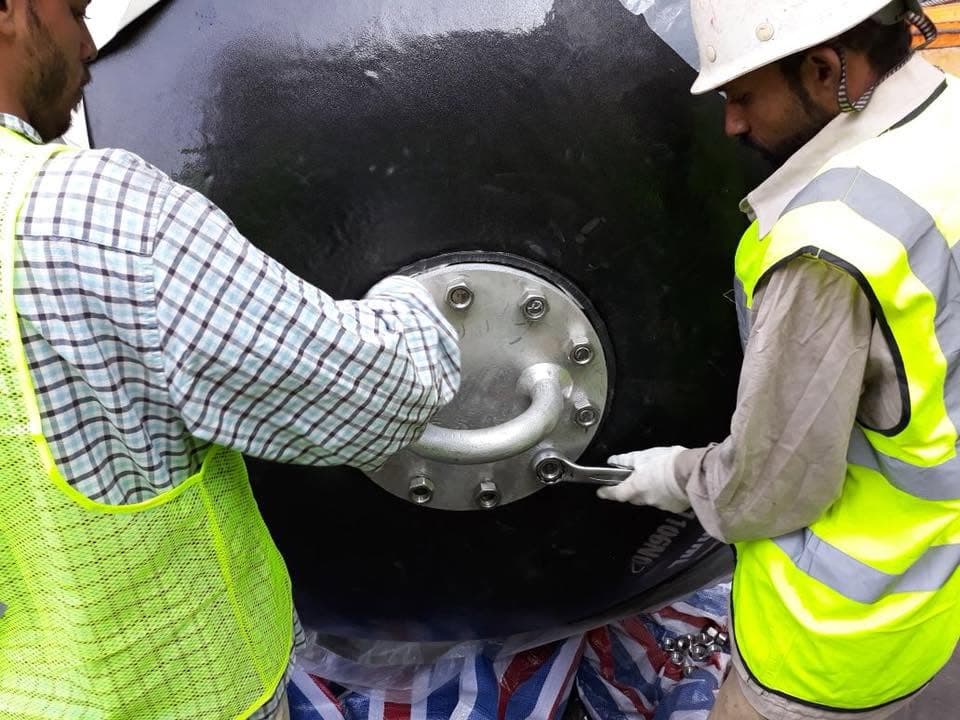
 PNEUMATIC PRESSURE AUDITFIELD REF-03
ARCHIVE LOG 03 // FIELD RECORD
50/80 kPa Inflation Validation
Dual-stage internal pressure calibration and dynamic hull impact deflection sign-off.
Technical Advisory & FAQs
Frequently Asked Engineering Questions
Authoritative answers to common procurement, engineering standards, and execution queries regarding marine balloon fender installation:
What internal air pressure (kPa) is calibrated for commercial cargo vessel berthing?
We calibrate pneumatic balloon fenders to either 50 kPa (Standard initial pressure) or 80 kPa (High initial pressure) based on the berthing energy requirements and displacement tonnage (DWT) of cargo vessels using the berth.
Why are aircraft tires utilized in the protective chain net harness of pneumatic fenders?
Aviation tires feature heavy synthetic plies and ultra-thick tread rubber that absorb violent shear friction during vessel contact, protecting both the pneumatic fender rubber body and the vessel hull plating from abrasion.
How do dynamic tidal bridle chains accommodate 4.5m water level fluctuations?
Bridle chains are engineered with weighted lower sinkers, marine swivels, and calculated anchor lead lengths that enable the floating fender to rise and fall smoothly with the tide without rotating or tangling.
Industrial Portfolio
View All 7 ProjectsExplore More Engineering Projects
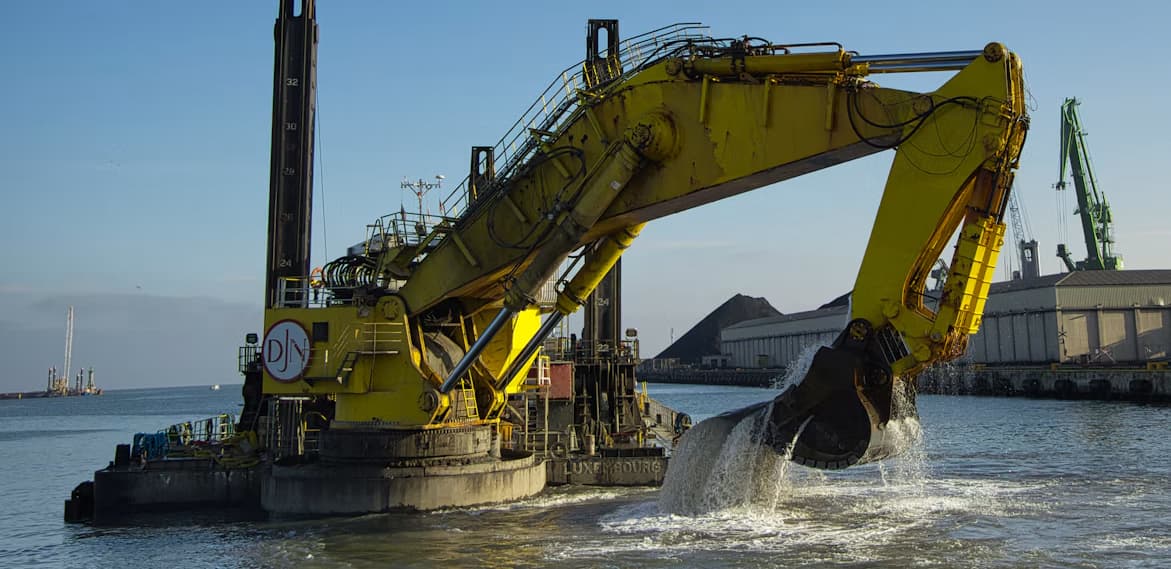 NAVAL INFRASTRUCTURE
Ormara Naval Base Dredging
Comprehensive underwater excavation, sediment extraction, and coastal navigation channel restoration executed under rigorous maritime security standards at Ormara Naval Base.
Case Study
 HIGHWAY INFRASTRUCTURE
Reflective Road Stud Installation
Precision road safety contracting delivering heavy-duty reflective cat eye road studs, engineered epoxy anchoring, and lane demarcation across industrial arterial routes.
Case Study
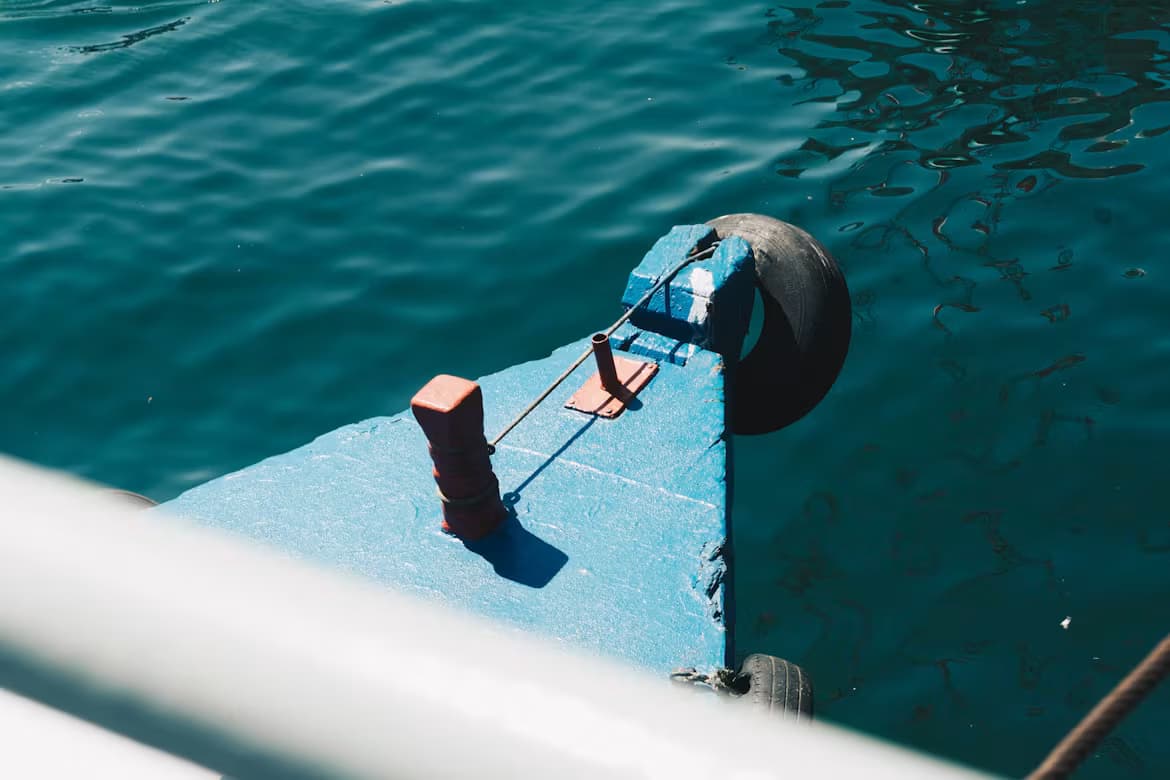 OFFSHORE BERTHING
Dolphin Fender Installation
Specialized installation of heavy cylindrical and cone rubber dolphin fenders onto offshore berthing piles designed to withstand extreme vessel contact during deep-sea mooring.
Case Study
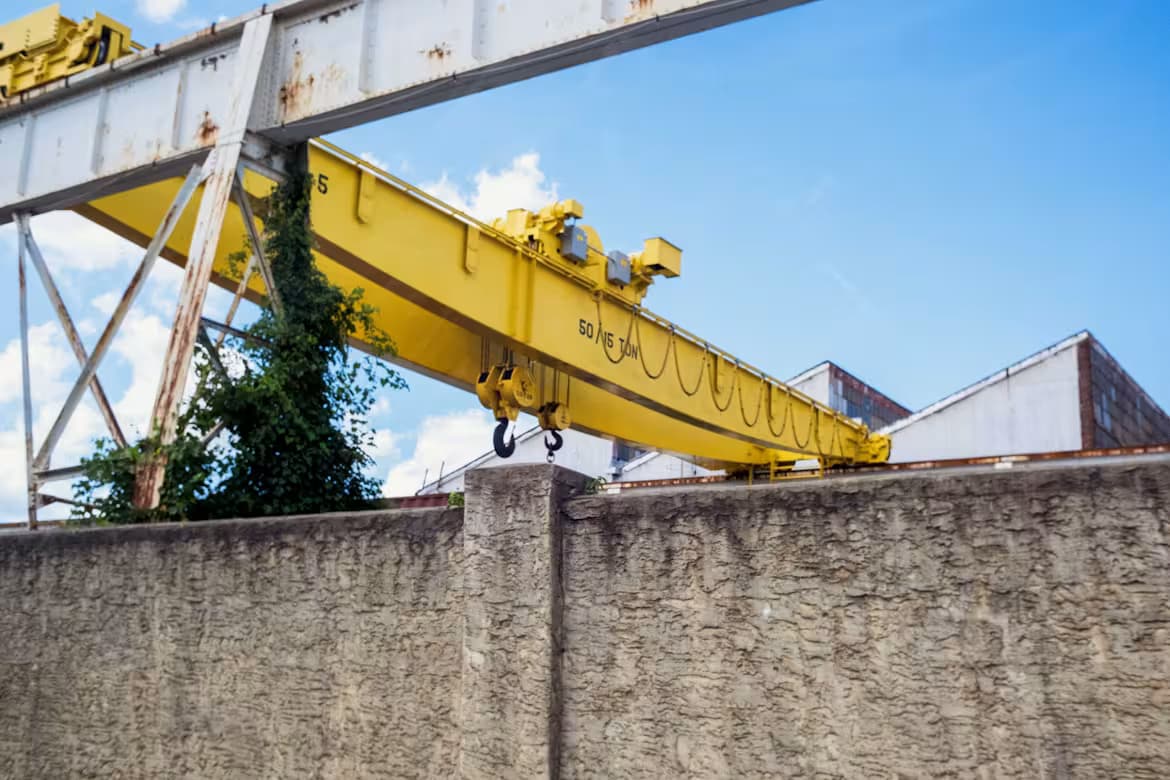 CRANE RAIL METROLOGY
Crane Rail Alignment & Installation
Precision laser-guided alignment, runway beam leveling, and DIN rail installation for a 50-ton heavy industrial overhead bridge crane corridor.
Case Study