Comprehensive lifting safety and rigging manual detailing ASME B30.9 and OSHA 1910.184 inspection protocols, broken wire discard limits, Flemish eye splices, and proof-load testing in Pakistan.
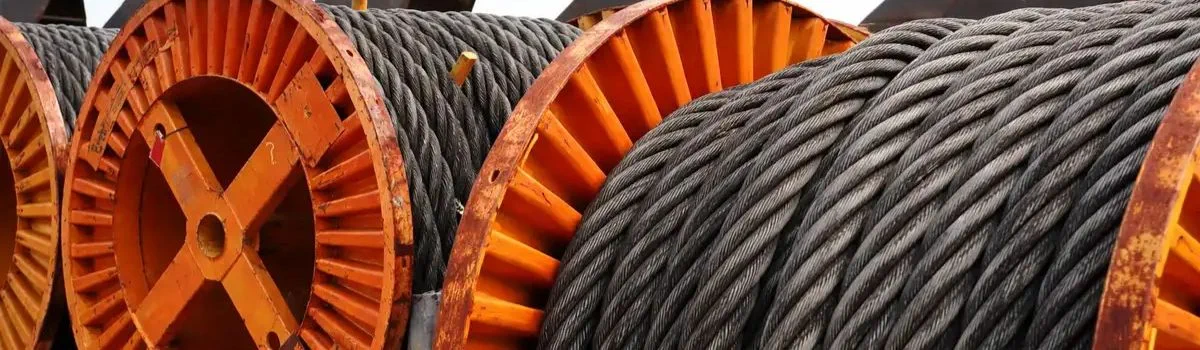
In heavy overhead lifting, dockside container handling, and industrial construction across Pakistan—including Karachi Port Trust (KPT), Port Muhammad Bin Qasim, Karachi Shipyard (KS&EW), Engro Thar coal terminals, and oil refineries (PARCO / PRL)—steel wire rope slings are the vital physical link between the crane hook and multi-ton payloads.
Under dynamic lifting conditions, wire rope slings are subjected to extreme tension, sudden shock loads, sharp-edge bending stresses, and aggressive coastal corrosion. A single catastrophic sling parting can cause fatal workplace accidents, destroy multi-million-rupee machinery, and shut down construction projects for months.
Strict compliance with ASME B30.9 (Slings), OSHA 1910.184, and the Factories Act 1934 (Pakistan) is mandatory for rigging supervisors, safety officers, and heavy-lift engineers.
Inspection Hierarchy: The Three Mandated Inspection Tiers
Under ASME B30.9, wire rope sling integrity must be verified through a continuous, multi-tiered inspection protocol:
1. Initial Inspection
Conducted on every brand-new or re-terminated sling before it enters service. The rigging engineer verifies that the sling matches purchase specifications, checks the manufacturer’s load test certificate, and confirms that a stamped steel ID tag is permanently affixed.
2. Frequent (Pre-Shift) Inspection
Performed at the beginning of each shift by the designated rigger or crane operator before any lift:
- Visually examine the entire rope length for obvious broken wires, kinks, doglegs, or heat discoloration.
- Inspect the eye loops, thimbles, and swaged sleeves for cracks or severe elongation.
- Check that the identification tag is present and legible.
3. Periodic Documented Inspection
A formal, thorough engineering audit conducted at least annually (or quarterly in severe marine, chemical, or continuous 24/7 industrial duty):
- Conducted by a certified rigging inspector or competent person.
- Involves physical measurement of rope diameter using vernier calipers, close optical examination of strand valleys for internal corrosion, and verification against historical lift logs.
- Written records must be maintained on site for regulatory and third-party insurance audits.
Critical Rejection Criteria: When to Discard Slings Immediately
Under ASME B30.9-2.9.5 and OSHA 1910.184(f)(5), a wire rope sling must be immediately pulled from service, tagged as scrap, and physically cut into pieces if any of the following defects are discovered:
1. Broken Wires
- Distributed Breaks: Ten (10) randomly distributed broken outer wires in one rope lay length.
- Concentrated Breaks: Five (5) broken wires in a single strand within one rope lay length.
- End-Termination Breaks: Even a single (1) broken wire immediately adjacent to or emerging from a swaged sleeve or socket termination requires immediate rejection, as it indicates severe localized fatigue concentration.
> What is One Rope Lay? One rope lay is the linear axial distance along the wire rope in which a single individual strand completes one full 360-degree spiral wrap around the core (typically 6 to 7 times the rope diameter).
2. Severe Outer Wire Wear & Peening
- A reduction in nominal rope diameter exceeding 5% of original specification.
- Loss of more than one-third (1/3) of the original diameter of individual outside wires due to continuous abrasive dragging across concrete or steel beams.
3. Structural Distortion: Kinks, Bird-Cages & Crushing
- Kinking: Permanent sharp bends in the rope caused by pulling a loop through a tight constriction. Kinking irreversibly unbalances strand tension, creating points of premature failure.
- Bird-Caging & Core Protrusion: Separation and flaring outward of outer strands, exposing or projecting the internal Independent Wire Rope Core (IWRC). Usually caused by sudden shock loading or severe torsional twist.
- Crushing & Flattening: Localized rope deformation caused by running heavy loads directly over the sling or improper stacking.
4. Thermal & Electrical Arc Damage
- Any localized heat bluing, melted wire tips, or weld spatter strikes.
- *Critical Site Warning:* Riggers must never use a crane hook or wire rope sling as an electrical grounding path for arc welding. High-amperage grounding currents create microscopic metallurgical martensite crystals that shatter under load like glass.
5. Corrosion & Valley Fatigue
- Severe pitting along outer wires or internal "red powder" (bleeding rust), which indicates complete dry friction and breakdown of internal factory lubricants inside the rope core.
6. Missing or Illegible Identification Tag
- Every commercial lifting sling must carry an indelible, stamped metal tag stating: Manufacturer Name, Working Load Limit (WLL) for vertical, choker, and basket hitches, Rope Diameter, and Serial Number. If this tag is missing or unreadable, the sling is legally condemned.
Flemish Eye Mechanical Splicing vs. Hand Tucking
How a sling’s eye loop is fabricated directly dictates its ultimate breaking strength and failure mode:
1. Flemish Eye Mechanical Splice (The Gold Standard)
- Fabrication Process: The wire rope end is unlaid into two sections (one bundle of 3 strands, and one bundle of 3 strands with the IWRC core). The two bundles are reverse-looped and re-braided into an interlocking eye, forming a complete loop. A heavy carbon steel swage sleeve is then positioned over the wire tails and cold-pressed under 500 to 1,000 tons of hydraulic pressure.
- Failsafe Advantage: Even if the steel swaged sleeve were cracked or destroyed in an accident, the interlocking re-braided strands of the Flemish eye retain over 70% to 80% of the sling's ultimate breaking strength.
- Mandatory for Overhead Rigging: Required by international marine terminals, offshore oil platforms, and heavy industrial plant operators.
2. Hand-Tucked Splices
- Strands are manually woven back into the rope body without a steel sleeve. While flexible, hand splices can unlay and slip if the load is allowed to spin or rotate freely in mid-air. Hand-tuck splices must be derated significantly.
3. The Hazard of Bulldog Clips (U-Bolt Clamps)
- Strictly Prohibited: ASME B30.9 and OSHA strictly forbid fabricating overhead lifting slings using U-bolt wire rope clips (bulldog grips). Wire clips crush the rope strands, reduce breaking strength by 20% to 40%, and can slide off under dynamic shock loading.
Understanding Sling Hitches & The Load Angle Factor
A wire rope sling's rated Working Load Limit (WLL) applies only to a true vertical lift ($90^circ$). Changing the hitch geometry or sling angle drastically alters capacity:
The Danger of Low Sling Angles in Multi-Leg Bridles:
When using 2-leg, 3-leg, or 4-leg bridle slings, the horizontal sling angle ($ heta$) between the sling leg and the load surface dramatically increases tension on each leg:
- At $60^circ$ Angle: Tension factor = 1.155 (Safe and recommended industrial practice).
- At $45^circ$ Angle: Tension factor = 1.414 (41% increase in leg load).
- At $30^circ$ Angle: Tension factor = 2.000 (Load on each leg doubles!).
- Rule of Thumb: Never rig a lift where the horizontal sling angle is less than $45^circ$ without formal engineering approval, and never permit angles below $30^circ$.
Proof-Load Testing & Fabrication at Alsons Hardware
To guarantee life-safety compliance, every custom wire rope sling fabricated by Alsons Hardware's Rigging & Fabrication Division undergoes strict quality assurance:
- Manufactured exclusively from prime certified high-tensile carbon steel wire rope (6x19 and 6x36 IWRC construction conforming to EN 12385 and API 9A).
- Precision hydraulic Flemish eye swaging with heavy-duty cast steel sleeves and DIN 6899B reinforced rope thimbles.
- Proof-Load Testing: Every assembly is pulled to 200% of its rated Working Load Limit (WLL) on calibrated horizontal tensile test beds.
- Accompanied by official load test certificates, serialized metal tags, and third-party inspection (TPI) documentation recognized by KPT, Port Qasim, and international EPC contractors.
Explore our custom rigging capabilities, lifting beams, and chain slings under Custom Fabrication Services or consult our engineers for site rigging assessments under Machining & Engineering Services.
Frequently Asked Questions
What safety design factor is required for wire rope lifting slings in Pakistan?
ASME B30.9 and international heavy-lift standards mandate a minimum **5:1 design safety factor** for wire rope slings (meaning the Minimum Breaking Force must be at least five times the rated Working Load Limit).
How often must wire rope slings undergo certified third-party proof-load testing?
Slings must be proof-load tested after fabrication or repair before their initial lift. Thereafter, ASME B30.9 mandates annual documented periodic visual inspections by a competent person. For offshore, marine port, or hazardous petrochemical operations in Pakistan, annual re-certification or magnetic rope testing (MRT) may be required by site safety audits.
Can a damaged wire rope sling be repaired by cutting off the damaged end and re-swaging?
Yes, provided the repair is performed by an authorized rigging fabrication facility like Alsons Hardware. The shortened sling must receive a new Flemish eye termination, an updated identification tag reflecting the new length, and must undergo a mandatory 200% proof-load test with updated certification before returning to service.
What is the difference between Fiber Core (FC) and Steel Core (IWRC) wire ropes for slings?
Fiber Core (FC) uses synthetic or sisal fiber, providing greater flexibility but low resistance to crushing under heavy load and zero tolerance for heat ($>82^circ ext{C}$). Independent Wire Rope Core (IWRC) features a miniature steel rope at the center, providing superior structural crush resistance and operational heat tolerance up to $204^circ ext{C}$ ($400^circ ext{F}$). IWRC is mandatory for all heavy industrial lifting slings.