Comprehensive engineering comparison of IGBT inverter vs. copper-wound transformer welding machines in Pakistan. Analyze power factor, duty cycle ratings, MMA/MIG/TIG processes, and industrial energy savings.
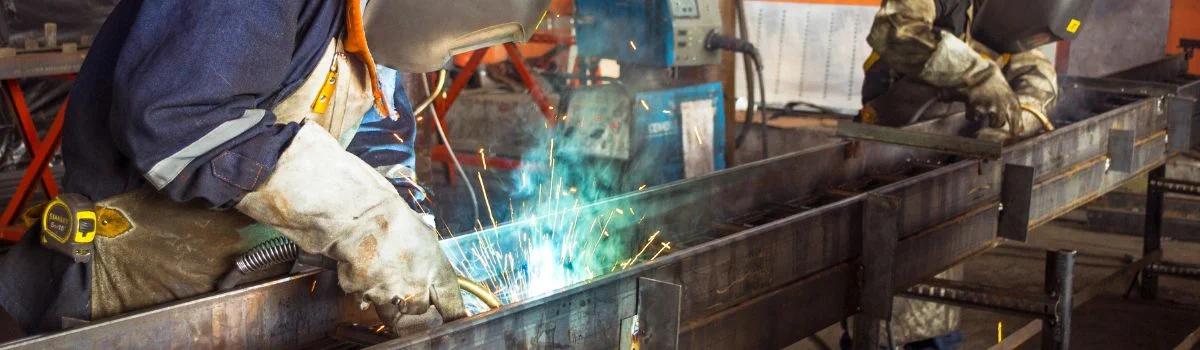
Metal fabrication plants, structural pre-engineered building (PEB) yards, and mechanical workshops across Karachi, Lahore, Gujranwala, and Faisalabad operate under demanding economic conditions: steep commercial peak-hour power tariffs (NEPRA / K-Electric B2 & B3 industrial rates), frequent grid voltage drops, and severe ambient summer temperatures exceeding 45°C.
For decades, conventional heavy copper-wound transformer welders were the default fixture on Pakistani shop floors due to their basic mechanical simplicity. Today, third-generation Insulated Gate Bipolar Transistor (IGBT) inverter welding machines have permanently replaced bulky transformers across heavy fabrication, oil and gas piping, and manufacturing lines nationwide.
Understanding the technical, operational, and financial differences is vital when procuring plant equipment.
Core Electrical Architecture: Inverter vs. Transformer
The primary distinction between the two machines lies in how electrical energy is transformed and controlled:
- Conventional Transformer Welders (50Hz Mains Operation): Utilize massive laminated iron cores wound with heavy copper or aluminum coils. They take standard 50Hz alternating current (AC) directly from the grid and step down the voltage while stepping up the amperage. Because electrical transformer size is inversely proportional to operating frequency, 50Hz units require enormous iron mass, weighing anywhere from 45kg to 120kg.
- Modern IGBT Inverter Welders (20kHz-50kHz Switching): First rectify 50Hz AC grid power into high-voltage direct current (DC). High-speed solid-state IGBT semiconductors then invert this DC back into high-frequency AC at 20,000 to 50,000 cycles per second (20–50 kHz). A microscopic ferrite transformer steps down the high-frequency voltage, which is instantly rectified and smoothed by microcontrollers into pure, ripple-free DC welding current.
Power Consumption & Commercial Tariff Savings
Inverter technology delivers an average electrical power factor of 0.85 to 0.93, compared to an inefficient 0.55 to 0.65 on uncompensated transformer welders. Furthermore, inverter power conversion efficiency exceeds 85%, whereas traditional transformers convert a significant portion of incoming electricity directly into wasted heat through eddy current core losses.
Real-World Cost Comparison for Pakistani Fabrication Plants:
- A standard 250-Amp transformer welder drawing ~9.5 kVA on an 8-hour shift consumes approximately 45–55 kWh per day, heavily impacted by idle draw when the operator is not actively striking an arc.
- A modern 250-Amp IGBT inverter welder consumes approximately 22–28 kWh under the identical operational duty cycle, with negligible standby idle consumption (under 50 Watts).
- Under prevailing commercial and industrial tariffs in Karachi and Punjab, this difference yields savings of PKR 35,000 to PKR 65,000 per workstation monthly, effectively amortizing the capital procurement cost of an inverter machine within 3 to 6 months.
Arc Stability & Process Control (MMA, MIG/MAG, TIG)
The microsecond responsiveness of microprocessor-controlled IGBT inverters provides weld puddle control that analog transformers cannot replicate:
- Shielded Metal Arc Welding (MMA / Stick): Inverter machines feature integrated Hot Start (momentary amperage boost preventing electrode sticking on cold metal), Arc Force (automatic voltage adjustment preventing freeze during deep root passes), and Anti-Stick safety controls. They run both routine rutile electrodes (AWS E6013) and specialized low-hydrogen basic electrodes (AWS E7018 / E7016) with butter-smooth penetration and minimal spatter.
- Gas Metal Arc Welding (MIG / MAG): Modern multi-process synergic inverters, such as the Presscott Multi-Process Inverter Series, feed solid wire (AWS ER70S-6) or flux-cored wire continuously under pure CO2 or 80/20 Argon-CO2 shielding gas. With zero spatter and continuous wire feed, deposition rates are up to four times faster than manual stick welding on structural beams and storage tanks.
- Gas Tungsten Arc Welding (TIG / GTAW): Stable DC output allows precise Lift-TIG and high-frequency TIG welding on stainless steel (AISI 304/316), chrome-moly alloy pipes, and sanitary food-grade vessels without tungsten contamination.
Understanding Duty Cycle in 40°C-45°C Ambient Conditions
The most critical specification determining machine longevity on industrial sites is the Duty Cycle rated at 40°C ambient temperature (IEC 60974-1 standard).
Duty cycle defines the percentage of a 10-minute window a machine can operate continuously at a given amperage before thermal cut-off:
1. Light Workshop Duty (20% to 30%): Suitable only for light grill work, sheet fabrication, and intermittent maintenance. Under June heat in Sindh or Punjab, these machines trip thermal overload after 2–3 continuous rods.
2. Heavy Industrial Duty (60% to 100%): Standard for continuous site fabrication, shipyard repairs, and pipeline welding. A true 60% industrial inverter (e.g., 250A @ 60%) will burn 4.0mm (E7018) electrodes continuously without thermal interruption.
When procuring for production environments, verify that the duty cycle is certified at 40°C ambient, rather than misleading 20°C or 25°C laboratory ratings common among unbranded gray-market imports.
Low-Voltage Sags & Generator Compatibility in Pakistan
Industrial estates in Pakistan (including SITE, Korangi Creek, Sundar, and Hattar) regularly experience voltage fluctuations dipping as low as 160V during peak grid load hours.
Quality industrial inverters incorporate wide-tolerance Automatic Voltage Regulation (AVR) circuitry that compensates for input voltage swings between 160V and 260V without dropping the output welding arc.
When operating on diesel generators during load-shedding:
- Ensure the generator is equipped with a clean electronic AVR to keep Total Harmonic Distortion (THD) below 10%.
- Size the generator at a minimum of 1.5x the welder's maximum input kVA rating (e.g., a 7 kVA inverter requires a 10-12 kVA generator) to absorb inductive arc-strike surges cleanly without tripping generator breakers.
Maintenance & PCB Protection in Dusty Workshop Environments
While transformer welders withstand heavy airborne grit due to their lack of sensitive electronics, IGBT inverter circuit boards can be vulnerable to conductive metallic grinding dust if improperly sealed.
Essential Maintenance Protocols for Shop Floors:
- Isolated Air Channel Architecture: Procure machines where cooling air is routed through dedicated aluminum heat sink channels, isolating sensitive microcontrollers and gate drive PCBs from direct air contamination.
- Monthly De-dusting: Blow out internal dust monthly using clean, dry compressed air regulated to 2.5–3.0 bar. Never use moisture-laden air directly from an un-drained compressor line.
- Elevated Workshop Placement: Keep machines positioned on raised stands or mobile carts at least 18 inches off the ground, well clear of floor-level grinding swarf and puddle wash.
Verified Industrial Procurement in Karachi & Pakistan
Alsons Hardware provides authorized corporate supply and technical procurement of industrial welding machinery, consumables, and safety gear to EPC contractors, marine repair yards, and manufacturing facilities across Pakistan. Located in the commercial hub of Serai Road, Karachi, our inventory includes single-phase and three-phase multi-process units with verified manufacturer warranties, complete spare parts support, and pre-dispatch testing.
Explore our full catalog of certified Welding Equipment & Machinery or speak directly with our technical desk for tailored volume procurement.
Frequently Asked Questions
What is the main operational difference between an inverter and a transformer welder in Pakistan?
Inverter welders utilize high-frequency IGBT solid-state switching to produce a smooth, spatter-free DC arc while using 40% to 60% less electricity and weighing up to 80% less than heavy copper-wound transformer machines.
Can an industrial inverter welding machine run on a diesel generator during load shedding?
Yes. Modern inverters with wide-input voltage tolerance (160V-260V) run reliably on generators, provided the generator is equipped with an electronic AVR and sized at 1.5x the welder's input kVA rating.
Which welding machine is recommended for structural steel fabrication (I-beams and columns)?
For structural steel compliant with AWS D1.1 standards, heavy-duty 250A to 400A IGBT inverters capable of running AWS E7018 low-hydrogen electrodes with a certified 60% duty cycle at 40°C ambient are recommended.
Why do unbranded inverter welders burn out frequently in Karachi?
Cheap unbranded units often lack isolated cooling tunnels, conformal PCB moisture-protective coatings, and sufficient heat sink mass, causing conductive grinding dust or coastal salt humidity to short high-voltage capacitors.