A definitive engineering guide comparing Schedule 40 vs. Schedule 80 seamless carbon steel pipes, ASME B16.5 flange pressure classes (Class 150/300/600), and piping specifications for boilers and industrial plants in Pakistan.
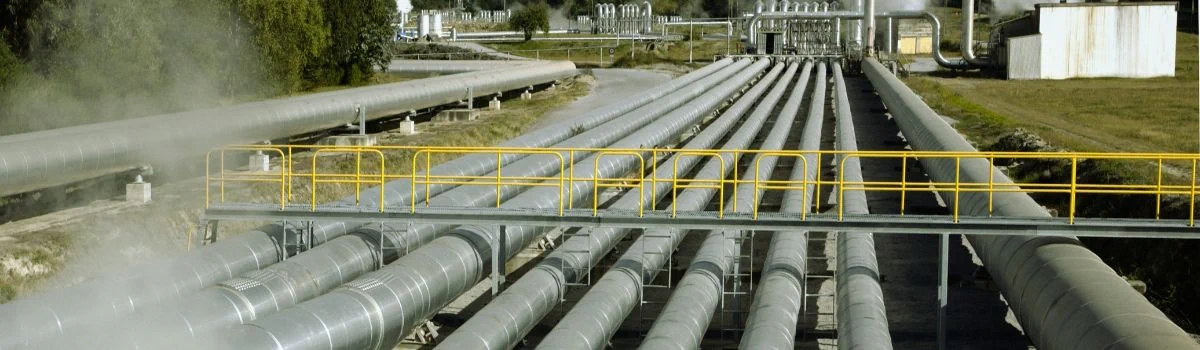
In chemical processing plants, textile dye houses, commercial boiler rooms, sugar mills, and industrial firefighting networks across Pakistan, pipe schedule selection is a critical life-safety engineering specification. A failure to understand the difference between Schedule 40 and Schedule 80 pipe wall thickness—or miscalculating flange pressure-temperature deratings—can result in catastrophic rupture, steam burns, and costly plant shutdowns.
Whether you are designing a high-pressure saturated steam main in Kot Lakhpat (Lahore), a process chemical manifold in Port Qasim (Karachi), or an industrial fire sprinkler loop in Faisalabad, specifying the exact combination of pipe schedule, steel grade, and flange rating ensures code compliance and decades of leak-free operation.
ASME B36.10M Dimensional Mechanics: Wall Thickness vs. Nominal Bore
Under the ASME/ANSI B36.10M standard for welded and seamless wrought steel pipes, the term "Schedule" (Sch) defines the wall thickness of a pipe.
A fundamental principle that mechanical contractors must remember is:
- For any given Nominal Pipe Size (NPS), the Outside Diameter (OD) remains completely constant, regardless of whether the pipe is Schedule 10, Schedule 40, Schedule 80, or Schedule 160.
- As the schedule number increases, the pipe wall thickness ($t$) increases inward, which directly reduces the Inside Diameter (ID / internal bore) and restricts the cross-sectional flow area.
Barlow's Formula for Internal Design Pressure:
The internal pressure-containing capacity of a cylindrical pipe is governed by Barlow's Formula:
$$P = \frac{2 \cdot S \cdot E \cdot t}{D_o}$$
Where:
- $P$ = Internal design working pressure (PSI or bar)
- $S$ = Maximum allowable material stress at operating temperature (PSI)
- $E$ = Longitudinal joint quality factor (1.0 for seamless pipe, 0.85 for ERW)
- $t$ = Specified nominal wall thickness (inches or mm) minus mill manufacturing tolerance (typically 12.5%)
- $D_o$ = Pipe Outside Diameter (inches or mm)
Because Schedule 80 pipes possess up to 30% to 50% thicker wall sections than Schedule 40 pipes of the same nominal diameter, they withstand significantly higher hoop stresses, mechanical vibrations, water hammer shockwaves, and wall-thinning caused by internal acidic corrosion.
Technical Comparison Matrix: Schedule 40 vs. Schedule 80 Across Common Sizes
When to Specify Schedule 40 vs. Schedule 80 in Pakistan
1. When to Specify Schedule 40 (Standard Weight - STD)
Schedule 40 is the undisputed industrial workhorse across commercial building services and low-to-medium pressure plant utilities:
- Commercial Firefighting & Sprinkler Mains: Fully compliant with NFPA 13 and Civil Defence Pakistan regulations for wet and dry riser firefighting networks up to 12 bar (175 PSI) working pressure.
- Chilled Water HVAC Loops & Cooling Towers: Condenser water and chilled water recirculation lines where non-corrosive treated water circulates at ambient temperatures.
- Factory Compressed Air Ring Mains: Central compressed air distribution headers operating at 7 to 10 bar (100 to 145 PSI), preventing dangerous shrapnel hazards associated with illegal PVC airline installations.
- Natural Gas Utility Piping: Regulated low-pressure natural gas feeds to industrial dryers, stenters, and boilers downstream of the primary PRMS (Pressure Regulating & Metering Station).
2. When to Specify Schedule 80 (Extra Strong - XS)
Schedule 80 is mandatory wherever high thermal stress, cyclic shock loads, chemical aggression, or erosive flow velocities occur:
- High-Pressure Steam & Boiler Headers: Saturated and superheated steam lines operating at 10 to 25 bar (150 to 360 PSI) and temperatures exceeding 180°C to 220°C.
- Corrosive Condensate Return Lines: Boiler condensate lines contain dissolved carbonic acid ($H_2CO_3$) and oxygen that cause aggressive localized pitting corrosion; the extra wall thickness of Schedule 80 ensures an extended corrosion allowance ($C_a$).
- Heavy Chemical & Acid Transfer Lines: Caustic soda, sulfuric acid, and dye liquor piping in textile chemical preparation areas.
- High-Pressure Hydraulic Power Distribution: Central hydraulic manifolds and hydraulic cylinder supply lines operating between 70 bar and 210 bar (1,000 to 3,000 PSI).
Material Standards: Seamless vs. ERW Welded Pipes
Specifying the correct material specification is just as critical as selecting wall thickness:
1. ASTM A106 Grade B (Seamless Carbon Steel)
- Manufacturing Process: Hot-extruded from solid cylindrical steel billets without any longitudinal or spiral weld seam.
- Mechanical Properties: Minimum yield strength $F_y = 240\text{ MPa}$ ($35\text{ ksi}$), tensile strength 415 MPa (60 ksi).
- Mandatory Application: Under the Pakistan Boiler Regulations (PBR), only certified seamless carbon steel pipe (ASTM A106 Gr. B) is legally approved for high-temperature, high-pressure steam boiler services and thermal oil circuits. The absence of a longitudinal seam eliminates the risk of weld failure under cyclic thermal expansion.
2. ASTM A53 Grade B (Seamless & ERW)
- Manufacturing Process: Available as Type S (Seamless) or Type E (Electric Resistance Welded from rolled strip steel).
- Application: Cost-effective solution for ambient temperature structural piping, HVAC piping, building plumbing, and general mechanical utilities where severe thermal cycling is absent.
3. API 5L Grade B / X52 (Line Pipe)
- Application: Formulated specifically for high-integrity natural gas and hydrocarbon transmission pipelines complying with Sui Southern Gas Company (SSGC) and Sui Northern Gas Pipelines Limited (SNGPL) utility standards.
Flange Pressure Classes: ASME/ANSI B16.5 Standards
Pipes integrate with valves, pumps, strainers, and pressure vessels through forged carbon steel flanges rated under the ASME B16.5 specification:
1. Flange Pressure Classes & Temperature Deratings
Flange classes do not represent a fixed maximum pressure; their allowable pressure decreases significantly as operating temperatures rise:
- Class 150 Flanges: Rated for up to 19.6 bar (285 PSI) at ambient temperature (-29°C to 38°C). However, at 200°C (typical boiler steam), its allowable rating derates to 13.8 bar (200 PSI).
- Class 300 Flanges: Rated for up to 51.1 bar (740 PSI) at ambient temperature. At 200°C, its allowable working pressure derates to 43.8 bar (635 PSI). Required for medium-pressure steam lines, boiler feed pumps, and thermal oil systems.
- Class 600 & 900 Flanges: Heavy-duty forged flanges rated up to 102 bar (1,480 PSI) and 153 bar (2,220 PSI) at ambient temperature, specified for high-pressure gas headers, refinery processing, and deep-well injection lines.
2. Flange Styles & Joint Selection
- Weld Neck (WN) Flanges: Feature a tapered hub butt-welded to the pipe end, providing full penetration strength and superior resistance to cyclic thermal shock and bending moments. Mandatory for critical steam lines.
- Slip-On (SO) Flanges: Slide over the pipe end and are secured with dual fillet welds (internal and external). Cost-effective and easy to align for general utility and water piping.
- Blind (BL) Flanges: Solid forged steel discs used to seal pipeline terminations, vessel manways, and isolate lines for hydrostatic pressure testing.
- Socket Weld (SW) Flanges: Used on small-bore piping (NPS 1/2" to 2") for high-pressure chemical lines where socket joint rigidity is required.
3. Flange Facings: Raised Face (RF) vs. Flat Face (FF)
- Raised Face (RF): Features a 1.6mm (Class 150/300) or 6.4mm (Class 600+) raised gasket surface with phonographic spiral concentric serrations (125 to 250 $\mu\text{in}$ Ra), concentrating bolt clamp force onto the gasket for high-integrity sealing.
- Flat Face (FF): Used when mating steel piping to fragile cast iron valves or pump casings to prevent cracking the cast iron flanges during bolt torquing.
High-Integrity Stud Bolts & Gaskets
A flanged piping joint is only as reliable as its fasteners and gasket seal:
- Stud Bolts: Industrial piping requires ASTM A193 Grade B7 chromium-molybdenum alloy steel stud bolts paired with ASTM A194 Grade 2H heavy hex nuts, capable of sustaining high tensile preload without yielding under thermal expansion.
- Spiral-Wound Gaskets (ASME B16.20): Feature V-shaped 316L stainless steel metal windings interleaved with flexible graphite filler, equipped with a carbon steel outer centering ring and a 316L inner ring to prevent inward gasket buckling under high-velocity steam flow.
Explore our comprehensive selection of prime carbon steel pipes, forged steel flanges, and butt-weld fittings under Pipes & Fittings at Alsons Hardware.
Frequently Asked Questions
Can Schedule 40 and Schedule 80 pipes use the same fittings and flanges?
Yes. Because Schedule 40 and Schedule 80 pipes share the exact same Outside Diameter (OD) for any given Nominal Pipe Size (NPS), standard ASME B16.5 Slip-On flanges fit both schedules identically. However, for butt-welded fittings (elbows, tees, and Weld-Neck flanges), the fitting wall thickness must match the pipe schedule (e.g., Schedule 80 fittings welded to Schedule 80 pipe) to avoid internal bore mismatch and severe flow turbulence.
Why is seamless pipe (ASTM A106) mandatory for steam boilers instead of ERW pipe?
ERW (Electric Resistance Welded) pipe contains a longitudinal fusion seam created by electrical resistance heating. Under the cyclic thermal expansion, water hammer pressure spikes, and elevated temperatures ($>200^\circ\text{C}$) of boiler steam operations, micro-flaws along the weld seam can propagate into catastrophic longitudinal splits. Seamless ASTM A106 Grade B pipe contains no weld seam, providing uniform hoop strength around the entire 360-degree circumference.
What is the difference between Class 150 and Class 300 flanges?
Class 300 flanges are physically heavier, with thicker flange plates, larger bolt circle diameters, and larger diameter bolt holes than Class 150 flanges of the same nominal size. Class 300 flanges withstand up to 51.1 bar (740 PSI) at ambient temperature, compared to 19.6 bar (285 PSI) for Class 150 flanges. Class 150 and Class 300 flanges have different bolt hole patterns and cannot be bolted together.
How do I verify that imported seamless carbon steel pipes meet project BOQ specifications?
Require an official **EN 10204 3.1 Mill Test Certificate (MTC)** from the manufacturer. Verify that the heat number stenciled on the pipe matches the MTC, confirming chemical carbon equivalent ($CEV \le 0.43$), yield strength ($\ge 240\text{ MPa}$), and 100% non-destructive hydrostatic or eddy-current testing at the mill.